I recently told a small group of men that I’m a clairvoyant medium and that I can channel messages from people who have passed.
We were gathered in a high-powered wood-burning sauna, roasting at about 220 degrees. A frequent but sporadic event called “Dad Sauna”. It is sporadic because we all have busy careers. It is frequent because we love it.
It’s a well-orchestrated Finnish sauna experience. Our host pours a stiff cocktail. Then we pile into the sauna and sit next to hundreds of pounds of hot iron and stones. When we can no longer stand the heat, we jump into a cold pool. After the plunge, we get out and let the steam roll off us on the deck as we chat and keep nursing our cocktails. It is intense relaxation.
In the sauna, I briefly explained how clairvoyance works: I see images in my mind’s eye that are not my own. After my story, I was asked a question:
“Are you sure you weren’t on acid?”
Firstly, anyone who has done acid wouldn’t ask that question.
Secondly, as a visual artist, I get asked this type of dismissive question often: “You made that? You must be on drugs.” This type of dismissal doesn’t stop at creativity and art. As a lifelong meditator, I hear people dismiss even-minded, sometimes even saintly people as “being high.”
I even heard the accusation thrown at a catholic school staff development meeting. A school principal who created a successful, entertaining, and beloved school culture at an elementary school presented his work to a room full of educators. When he opened the floor for questions, a tactless boomer asked him if he smoked “marijuana”. Karen clearly has never ripped a joint in her life. Culture tells us marijuana makes you lazy, but this woman is saying that if I smoke marijuana, I can build a successful charter school out of thin air. Which one is it?
“Are you sure you are not on drugs?” and other phrases like these are a way our culture dismisses any mindset or perspective that is not our own. In some cases, the “accusation” is worse than dismissing someone as crazy, because to a square, smoking marijuana is reckless and criminal.
Sir, your creativity, insight, and inner peace are a result of hapless behavior. Please leave.
Our culture has a serious problem. One that hamstrings our imaginations, health, and inner spirit. We lack the ability to discuss altered states of mind with nuance.
Imagination is synonymous with la-la land. Serenity is laziness, and if anyone’s eyeball capillaries aren’t bursting with anxiety, we say they’re “out to lunch.” Worse, when someone comes from the lofty summit of human awareness and brings down insight, art, music, or poetry, we dismiss them as a “druggy”.
I’ve got news for you. We are all on drugs. Not the good kind either. These are not drugs that vivify life and make us confront the light in the lanterns of our hearts. These are numbing drugs. Drugs that absolve us of personal responsibility. Drugs that dull our imaginations, make us small, chain us to the earth, and make us wretch at the thought of losing our stash.
What are they? Our own thoughts- limiting self-beliefs.
A shitty thought is like shitty software; it junks up your system. Fucks up your breath patterns, warps the images on your screen, and limits your potential.
What is the potential for the human imagination? There is no limit to it. If you don’t believe me, go ahead and close your eyes, imagine a little spaceship flying in space, and fly your little spaceship around until you reach the edge of the universe… I’ll wait. When you were flying in space, did you see big burning stars, comets, galaxies, and nebulae?
Are you sure you weren’t on acid?
People who have taken psychedelics do not ask this question, because they are educated by firsthand empirical experience with altered states of consciousness.
Even a mild LSD trip is more than enough to prove to anyone that our minds are seriously limited. What are they limited by? The habit of reducing our personal experiences down into boring assumptions. As Aldous Huxley says in his seminal work on psychedelics, The Doors of Perception, “familiarity breeds indifference.”
What are busy dads piled into a sauna indifferent to? Almost everything.
Before we continue, in case you are indifferent to almost everything as well, dear reader, I am going to get explicit. Very specific. We are going to discuss something that you probably have not considered in a very long time. Something right in front of you in this very moment. We are going to talk about your hands. More accurately, one hand. We do not need both for this exercise.
First, let us briefly examine a hackneyed comedy movie trope that involves a hand:
A character gets so high that all they can do is stare at their hand. They examine their own hand in wonderment. Full of joy looking at something mundane. For the rest of this program, we will call this phenomenon Acid Hand.
Busy dads use their hands all day. Even at night in their sleep, their hands scratch their ass and itch their faces (hopefully not in that order). When was the last time any of us stopped to notice our hands, other than to address dirt or splinters?
Think for a moment about all of the amazing things our hands can do:
- Make shadow puppets
- Sign war declarations
- Play the flute
- Drive a car
- Flip the bird
- Argue in sign language about whether the author (who is typing with his hands) is on acid or not.
A majority of the men in the sauna are very well educated. PhDs and MDs. These are men who can:
- Perform surgery on a hand.
- Cook, distill, and chemically isolate molecules of a hand.
- Explain the evolution of the anatomical and physiological structures of a hand.
- Quickly repair a hand after a catastrophic firework accident.
- Design wireless networks that deliver internet (almost all human knowledge) directly into people’s hands via their smartphones.
However, in none of these procedures is the hand seen so fully that it is considered awesome.
To the acid tripper, his Acid Hand becomes so vivid, he can see every pore, hair, and fingerprint- it seems to glow with an ineffable beingness that can only be described as awe-some. So full of awe, the experience of the hand stops at the sight of the hand. More importantly, the experience of the hand does not continue into the grey, dull, musty filing cabinet of preconception. The hand is so damn beautiful and odd, it must be addressed instead of taken for granted:
“Ah! My hand. Buddha had these. Jesus had these. Hitler had these. Van Gogh had these. What did they do with them? What will I do with them? First, I will honor them, because I feel like I’m seeing them for the first time”
Then the Acid Hand exposes us to its archetypal and subconscious depth:
“My mother had hands that held me… My teacher had hands that scolded me…Thor held lightning in his…”.
Memories and experiences we have been indifferent to well up; thus begin laughs of joy and sorrow that heal us. The energy that is you is released. The foggy mirror is wiped, vivid you-ness revealed. The you, freed from old thoughts. The you that has hands, but is somehow beyond them. Your hands look and feel like holy instruments, which they are.
To further our analysis of the Acid Hand phenomenon, let’s read some poetry by William Blake, England’s favorite mystic, often quoted by psychedelic researchers and philosophers:
To see a world in a grain of sand
And heaven in a wildflower
Hold infinity in the palm of your hand
And eternity in an hour.
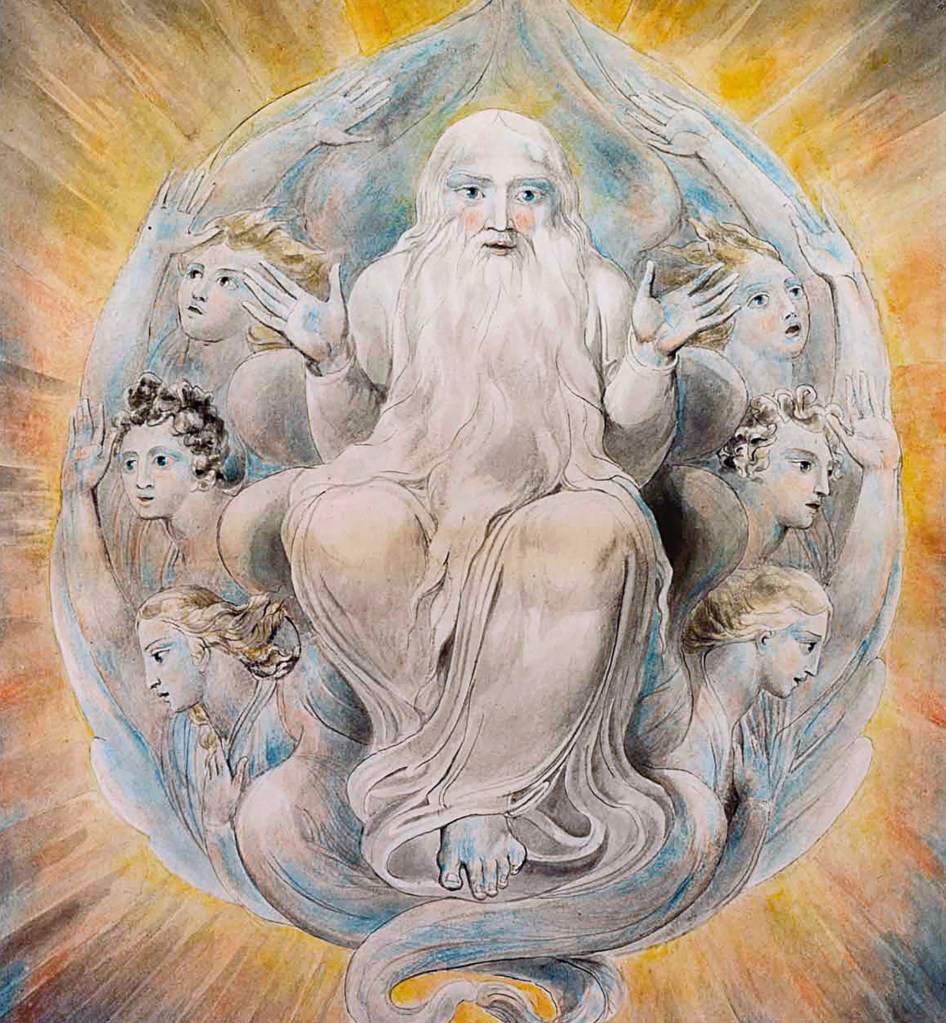
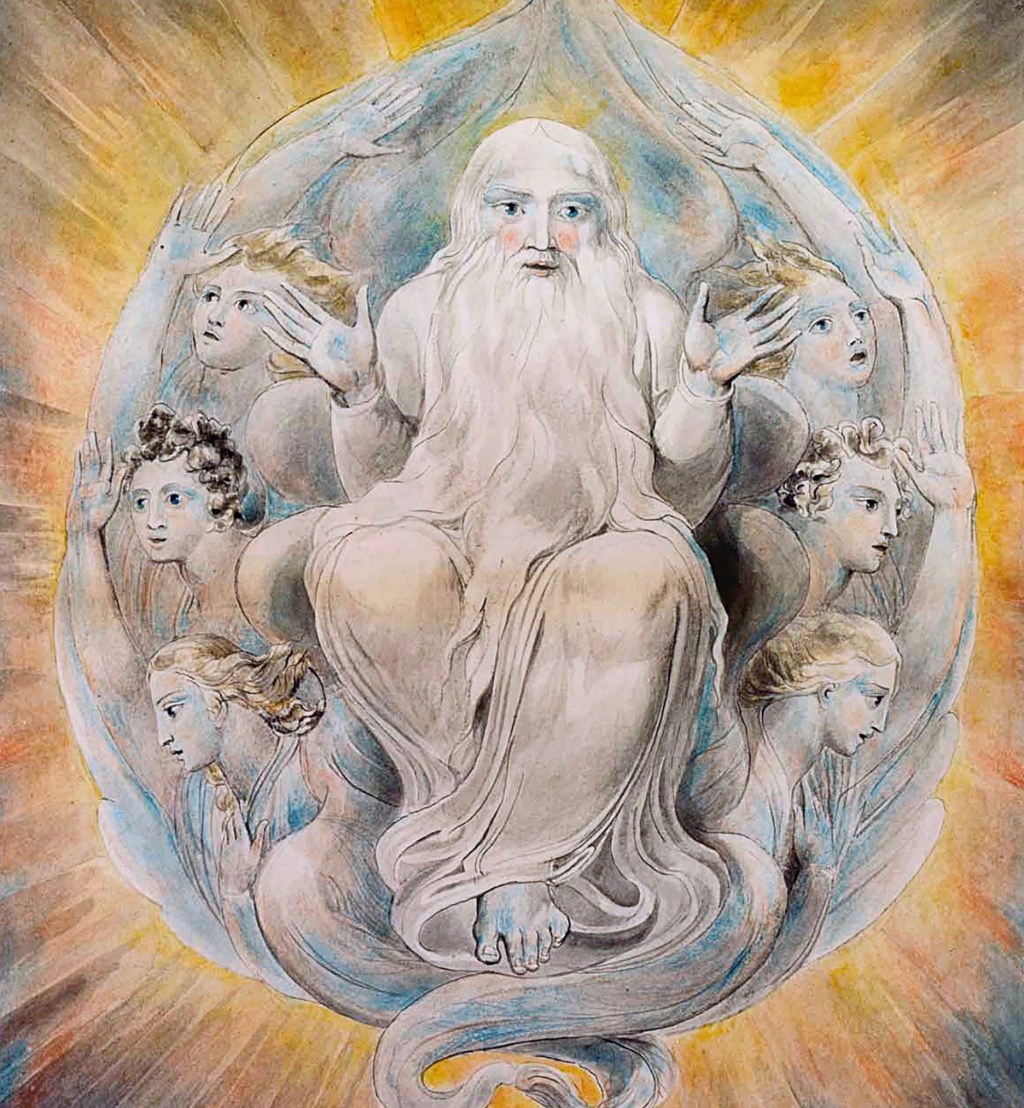
Was William Blake on acid? No, Auguries of Innocence was written in 1803. The psychoactive properties of LSD will not be discovered for another 140 years. Did Blake’s contemporaries accuse him of being on acid? No, but they certainly dismissed him. As a child, on a walk, Blake saw a tree full of singing angels. When he told his father about it, he was beaten. As an adult, Blake’s art career took a beating, too. Robert Hunt, a critic who visited one of Blake’s exhibitions, described Blake as “An unfortunate lunatic, whose personal inoffensiveness secures him from confinement”. Blake died broke, buried in a beggar’s cemetery in an unmarked grave. Today, Blake is one of the most celebrated English poets and artists. His song, Jerusalem, is a patriotic smash hit. It is sung with fervor at English soccer matches, and played during BBC programs.
When Huxley wrote The Doors of Perception, the title came from another one of Blake’s poems, The Marriage of Heaven & Hell:
If the doors of perception were cleansed every thing would appear to man as it is, Infinite. For man has closed himself up, till he sees all things thro’ narrow chinks of his cavern.
How is an 18th-century poet who never took a psychedelic, in his own way, an expert on psychedelic states? It is because psychedelics open up the “chinks in our cavern”. They take our blinders off, and reveal the world we’ve been ignoring. This world. Psychedelics don’t make you creative; they reveal the quality of creativity already within you. If you don’t believe me, try feeding some LSD to a rock and see if it can play guitar like Jimi Hendrix.
The universe is creative. You are the universe. Instead of looking at our hands in amazement, we use them to cover our own eyes and complain that it is dark.
The mystical states of non-ordinary consciousness are not unnatural. That’s why we celebrate William Blake. He told culture he saw angels; culture beat him. He showed culture his drawings; culture dismissed him as a madman.
Mystics are not high. They simply pick up extra information that not everyone else notices. When we look at a caterpillar, do we see only a bumpy, hairy worm, or do we see a butterfly?
Preconception, viewing the world through the “chinks in our cavern, limits our ability to imagine personal metamorphosis; it also limits our ability to see things as they are: Beautiful.
Blake didn’t just stop to smell the roses; he saw heaven in them. Acid hands are not an apparition; they have heaven in them. Not because of a psychoactive chemical, but because those hands are you.

Leave a Reply